Jack Kennedy may have died in Dallas 41 autumns ago but he lives forever in the 617 Area. And no revisionism can diminish the influence he had on generations of pols who followed, a lot of them desperately mimicking the original.
Even if the so-called Kennedy curse doesn’t exist, it seems the family is suffering through another crisis. Joan Kennedy, first wife of Senator Ted Kennedy, seeks to sell her Cape Cod home. This move has been portrayed as retaliation against kids over her guardianship while undergoing treatment for alcoholism. Mike Barnicle from the Boston Herald, presidential historian Richard Shenkman, and celebrity attorney Raoul Felder discuss the issue with MSNBC-TV’s Joe Scarborough.
BOSTON GLOBE
May 31, 1998
At the intersection of VFW Parkway and LaGrange Street in West Roxbury there is a sign that stands like a silent sentry reminding us of a proud past filled with a quiet sadness that lingers still across all the years even though the American memory seems to have less and less capacity to recall the cruel and true costs of war. It is a memorial to brothers — Thomas and Gerald Keenan — who died in 1944.
Each day, thousands pass through the busy crossroads. And, each day, the sign is there, nearly invisible to those idling in autos: “Keenan Memorial Square,” the top line reads. “Thomas W. Jr. — US Marines, 1920-1944.” And, right beside the brief reference to that young man, “Gerald J. — US Navy, 1925-1944. Brothers who gave the supreme sacrifice for their country. For a long time I wondered about those brave boys. Who were they? Where did they live? When did they die? Who — and what — did they leave behind?
The other day along LaGrange, nobody seemed to know. It’s understandable; too much time has passed. People come, people go. Families move, taking local lore or the treasure of stories spawned on city streets to new ZIP codes and suburban destinations where the past is homogenized, packed away or even forgotten, like relics in an attic.
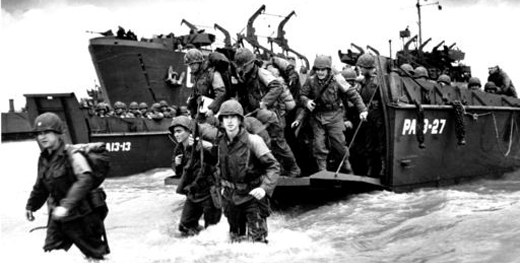
Fifty-four years ago, the United States was a different country. The dimension, the scope and the staggering casualties of a great war fought on two fronts had reached into every household. The Depression had been defeated. D-Day sent a coast-to-coast current of electric euphoria that was offset only by the continual drumroll and the sound of “Taps” that echoed in graveyards of small towns as well as big cities where so many families were touched with the tears and the toll of burying their heroic dead.
St. Joseph’s Cemetery is just a quarter-mile from the sign. And there, in a lovely grotto surrounded by the shade of a mature elm, a flat, stone marker was discovered in freshly cut grass. This is where Thomas and Gerald came after being brought home from their war.
Shut your eyes and you can see them still — and you can sense the society that mourned them after they lost their lives in battles that helped deliver the gift of liberty we open each morning. They returned to a place where self-pity was a stranger, where neighbors knew each other, where people actually volunteered for duty and willingly went without staples like sugar or gas because the cause was greater than any individual need, the collective will stronger than the smug selfishness thatoften sets us apart today.
But who were they? And what did they leave behind?
“I think you need to talk to my uncle,” said the young man who answered the door at the house where both boys grew up. “They know the story. And it’s still sad to talk about.”
Thomas and Helen Keenan had 10 children, seven boys and three girls. The father was a Boston firefighter. The family lived in West Roxbury. After Pearl Harbor, the oldest, Tom Jr., joined the Marine Corps. A few months later, his brother Gerald enlisted in the Navy after Roslindale High.
“Thomas died in the battle for Tinian Island,” his brother Joe, 71, recalled yesterday. “He died July 14, 1944. A priest came to the house with the fellow from Western Union. That’s how we were told: a telegram.
“Two weeks later, Gerald died when the Japs torpedoed his ship, the Canberra. Funny thing is, I helped build that boat at the Charlestown Navy Yard. It was a very difficult time. My parents never got over it.”
Both brothers came back to Boston together in death. They were waked at the old Legion Post in West Roxbury, blocks from their boyhood home, and buried side-by-side on Aug. 28, 1944.
Less than a year later, World War II was over. Germany surrendered the following spring. The Japanese conceded defeat in late summer, all because so many brave young men swallowed their fear and delivered their lives to a common cause not often recalled all these years later.
Thomas Keenan was 23. His brother Gerald was 19. And yesterday — Memorial Day — was all about them.
BOSTON GLOBE
May 26, 1998
BELFAST — It is a balmy, lemon-yellow evening and I am standing outside a large glass and cement structure called Waterfront Hall, completed last year along the River Lagan in Belfast where people have the capacity to loathe a stranger based solely on beliefs or a baptism. Community input here means a funeral or a fire, yet it occurs to me that in the middle of shootings and bombings they have managed to achieve something that seems out of reach in Boston: They have built a convention center. Earlier, with the town in the grip of unseasonably warm weather, I am strolling Whiterock Road in West Belfast, reminded again that a hot sun is truly the full moon for the Irish. Half the men out on stoops are nearly naked, their skin the color of boiled lobster claws.
Here is what you can get in the North: An Armalite-rifle. C-2 explosives. A bazooka. Hand grenades. Flamethrowers. Surface-to-air missiles. A majority voting for peace. And here is what you cannot get: Sunblock.
At the intersection of Whiterock and Ballymurphy, Cian Moran is sitting on a milk crate outside his flat. He is wearing a tight blue Speedo bathing suit. He is a heavy man. It is not an attractive sight because his stomach is at war with the elastic waist of the swimsuit and from a distance it appears Moran might be eight months pregnant as he basks alongside his girlfriend, Claire Corrigan, who, incredibly, is not blind.
“Did you bring any of that Viagra with you from America?” Moran wants to know. “That would do the boys a world of good, wouldn’t it luv? That’s the worst moment of a man’s life, failing in bed. I vote yes for Viagra.”
“Worse moment of your life was when the Park View was shut for repairs,” Corrigan tells him, referring to a bar alongside Milltown Cemetery.
That cemetery serves as sort of a huge community center for a people raised on funerals and sad farewells. The caretaker, Sean Armstrong, talks about it as if he were the curator of a macabre Hall of Fame, pointing out where various people’s remains lie, how they died, and whether they were on “active duty” when they fell in the long fight against England.
“Oh, cemeteries are big stuff in Ireland,” Monsignor Denis Faul points out. “Big stuff.”
So are priests. In the absence of a true, old-fashioned political network, priests are a combination of state reps and city councilors who are wired throughout their parishes. Nothing happens without their knowledge. Not a birth. A death. A fight, a plot, a prayer, or a promise. Nothing!
Back in Holy Trinity Church, Mary Kelly sat with bowed head a few days prior to the biggest event in her life. She is 91 and could barely wait to cast a ballot for the future last Friday.
“Not so much for me but for the younger people,” she observed. “People like my son.”
“How old is your son?” she was asked.
“70,” she replied.
In one day, she sat through two Masses, a First Communion, and a gypsy wedding. The church is actually her second home. It is a quiet haven from the horrors that have stalked the old lady’s neighborhood for at least 30 years, filling the streets around her with an awful sadness and a nearly constant violence that leveled off only in the past three years but now, with a tremendous “Yes” vote, could actually recede to the point where children born today could assume a normal childhood tomorrow.
That sound — laughter — remains the hallmark of a resilient people who have survived a horrible history due, in some small measure, to the safety net provided by their own sense of humor. Their city and country have been mangled by murder and bigotry, but the people are still standing, some of them even hopeful, in a place progressive enough to vote for peace as well as build a convention center that can’t get off the ground back in Boston.
BELFAST — It is a balmy, lemon-yellow evening and I am standing outside a large glass and cement structure called Waterfront Hall, completed last year along the River Lagan in Belfast where people have the capacity to loathe a stranger based solely on beliefs or a baptism. Community input here means a funeral or a fire, yet it occurs to me that in the middle of shootings and bombings they have managed to achieve something that seems out of reach in Boston: They have built a convention center. Earlier, with the town in the grip of unseasonably warm weather, I am strolling White Rock Road in West Belfast, reminded again that a hot sun is truly the full moon for the Irish. Half the men out on stoops are nearly naked, their skin the color of boiled lobster claws.
Here is what you can get in the North: An Armalite-rifle. C-2 explosives. A bazooka. Hand grenades. Flamethrowers. Surface-to-air missiles. A majority voting for peace. And here is what you cannot get: Sunblock.
At the intersection of White Rock and Ballymurphy, Cian Moran is sitting on a milk crate outside his flat. He is wearing a tight blue Speedo bathing suit. He is a heavy man. It is not an attractive sight because his stomach is at war with the elastic waist of the swimsuit and from a distance it appears Moran might be eight months pregnant as he basks alongside his girlfriend, Claire Corrigan, who, incredibly, is not blind.
“Did you bring any of that Viagra with you from America?” Moran wants to know. “That would do the boys a world of good, wouldn’t it luv? That’s the worst moment of a man’s life, failing in bed. I vote yes for Viagra.”
“Worse moment of your life was when the Park View was shut for repairs,” Corrigan tells him, referring to a bar alongside Milltown Cemetery.
That cemetery serves as sort of a huge community center for a people raised on funerals and sad farewells. The caretaker, Sean Armstrong, talks about it as if he were the curator of a macabre Hall of Fame, pointing out where various people’s remains lie, how they died, and whether they were on “active duty” when they fell in the long fight against England.
“Oh, cemeteries are big stuff in Ireland,” Monsignor Denis Faul points out. “Big stuff.”
So are priests. In the absence of a true, old-fashioned political network, priests are a combination of state reps and city councilors who are wired throughout their parishes. Nothing happens without their knowledge. Not a birth. A death. A fight, a plot, a prayer, or a promise. Nothing!
Back in Holy Trinity Church, Mary Kelly sat with bowed head a few days prior to the biggest event in her life. She is 91 and could barely wait to cast a ballot for the future last Friday.
“Not so much for me but for the younger people,” she observed. “People like my son.”
“How old is your son?” she was asked.
“70,” she replied.
In one day, she sat through two Masses, a First Communion, and a gypsy wedding. The church is actually her second home. It is a quiet haven from the horrors that have stalked the old lady’s neighborhood for at least 30 years, filling the streets around her with an awful sadness and a nearly constant violence that leveled off only in the past three years but now, with a tremendous “Yes” vote, could actually recede to the point where children born today could assume a normal childhood tomorrow.
That sound — laughter — remains the hallmark of a resilient people who have survived a horrible history due, in some small measure, to the safety net provided by their own sense of humor. Their city and country have been mangled by murder and bigotry, but the people are still standing, some of them even hopeful, in a place progressive enough to vote for peace as well as build a convention center that can’t get off the ground back in Boston.
BOSTON GLOBE
May 20, 1998
DUNGANNON, Northern Ireland — He has stood over too many fresh graves filled with victims of a stale hatred that is quite pervasive but he manages to greet each day with a grin along with a hope that the children he teaches will somehow manage to prosper here in a small country where education might eventually prove to be a larger asset than a ballot measure that has all the politicians talking while the public on both sides — Catholic and Protestant — approach the election with sealed lips anda grim pessimism.
He is 66 years old, Monsignor Denis Faul is, and he is the principal of St. Patrick’s Academy, where 940 boys and 930 girls attend classes in a huge school set on a hillside alongside an awkward neighbor — a British Army post — as constant noise from helicopters interrupts geometry and geography. “They’d never get away with flying in and out over a Protestant school,” the monsignor said yesterday. “It’s just the way it is here.”
Denis Faul is not a shy man. He has specific views and certain opinions. He also has credentials among Catholics: For years, he said daily Mass for prisoners in the Maze prison and alienated the IRA when he was instrumental in ending the hunger strike nearly two decades ago.
“We had 10 already dead and they had had 20 more ready to die,” Faul recalled. “Enough was enough. Ireland doesn’t need any more funerals or any more martyrs. I helped get the lads to stop and the IRA never forgave me.
“Let me tell you what will happen Friday,” he declared. “It will be a 55 to 45 vote for the Yes position. Just enough to create chaos. People are truly torn about this because it’s an argument between the head and the heart.
“For most people on both sides — the majority in the middle — their heads tell them to stay with Great Britain because they’re afraid of losing their benefits, their free education, free health as well as what they get from the dole. But their heart tells them to vote with Dublin. And, of course, they’ve had “Moses” Mitchell and “Moses” Hume with their new commandments, but the real issues are not discussed.
“There is indeed a strong element of bigotry among Protestant leaders and the only way this will work is for everyone to take a vow to protect human life, get rid of the guns, and look after the victims. That will have to be done street by street, parish by parish, and town line by town line. And it will only succeed by bringing charity and a lot of forgiveness to the task.
“There are very long memories here,” he added. “People know that whenever Catholics have shown advances in acquiring legal rights, civil rights, poltical and economic rights, that’s when the assassinations begin again. The Protestants fear Catholic advancement.
“When Sinn Fein had the prisoners appear at the rally last week, it was a dreadful blunder, but it was done because the IRA runs Sinn Fein. Gerry Adams is a very clever man. But he’s a vain man, and that’s dangerous. Yet he’s patient. He knows time is on his side, so he can wait to see how unmanageable the new process will be because he knows, in the end, the British will have to deal with him. Not Dublin. Not Washington. Him. He views a Yes vote as a tactical vote for the IRA and Gerry Adams.ts do not know who they are. They have no sense of identity. They’re not Irish, not British, not Welsh; all they have to cling to is the fact that they won the Battle of the Boyne in 1690 — not that long ago in Ireland — and that’s why they go crazy during marching season in July.
“That gets to the issue of justice, too. The application of the law toward Catholics is unjust. It’s at the heart of the whole debate over the release of the prisoners. Since 1968, not a single RUC [Royal Ulster Constabulary] man has served a day in jail for killing while on duty or torturing people arrested under emergenecy laws. Twelve children and many adults were killed and no one was ever charged. So the Catholics say, “Why am I doing 25 years in prison when the man who killed my son or
“Now I’ll be voting Yes on Friday,” Monsignor Denis Faul stated. “But you can’t build a government on a 55 to 45 vote. You have to have education with a spiritual background as well as human rights, and you must have a soul and be willing to forgive. That’s the foundation we need to build.”
Then he stood at his desk and glanced out the window behind him at an Army helicopter skidding through the sky above his school. The noise was fierce, but the priest’s smile was gentle as he said, “They wouldn’t dare do that to any other people.
BOSTON GLOBE
May 19, 1998
POYNTZPASS, Northern Ireland — She came into the pub through a back door that led to a courtyard alongside a stone house that is actually an extension of The Railway Bar, where two men were murdered a few months ago in a rural village that had always provided residents with great pride because faith never infringed on friendship and blood never spilled due to religion. She came past a door shattered by bullets, carrying a pot of tea and a plate of sausage.
“My supper,” she smiled. “It has to last me the night. “Who was working then?” she was asked.
“Who do you think?” Bernadette Canavan said. “Me. I was right here behind the bar. They put the lads down on the floor and killed them. Both of them. Damien and Philip, killed them for no reason. Just hate.”
Bernadette Canavan is 69. She and her husband, Des, along with their son Brian, 39, run the place plus the grocery next door. At 9 p.m. on March 3, Damien Trainor, a 26-year-old Catholic, and Philip Allen, a 35-year-old Protestant, were murdered inside the Railway, a snug stop with five stools and a 20-foot bar that attracts customers throughout the quiet area.
“They grew up together,” Brian Canavan said. “Damien was going to be best man at Phil’s wedding. There was never any religious war here.”
The Allens live 50 yards from the tavern. Their son, a truck driver, is buried 200 yards up the road, behind the Presbyterian Meeting House.
“I’ll never be right again,” his mother, Ethel, said. “I can think of nothing else. I don’t know that I can bring myself to go vote.”
The country is days from a referendum aimed at reducing the terror that has haunted Ireland, a measure that would drastically alter how people live. But the ballot arrives too late for a place so small it remains crushed by the type of mindless murder that created a violent claustrophobia within the culture of the North, keeping people apart on the basis of religion and fear. Always, the village seemed immune to the illogical reality around them, until two of their own died on a barroom floor.ative to a land hardened by dark shadows of gunmen.
“I was sitting right here at home,” Trainor said in her living room. “I ran up to the pub. I leaned over and told Damien I was there with him.
“He’d been shot four times, three in the chest, one in the head by those savages. They took him to the hospital in Newry, but he died. I told them I wanted to see him. They brought me to him. I put my forehead on his and kissed him. I shut his eyes. I pulled back the white sheet and straightened the crucifix around his neck. Philip was there in the same room, the two of them dead side by side. I never cried.”
“Having Damien was hard work,” she continued. “Raising him was hard work. And he’s still hard work because it hurts so much to think about him. My friends send me memory cards, but I don’t need any cards to remember how wonderful my son was. To everyone.”
“I’ll tell you something,” the victim’s mother announced. “There might be peace in Northern Ireland someday. But there will never be any peace for me.”
The men charged with the murders of two friends who lived yards apart in a hamlet where news arrives by word of mouth, and there are no secrets, were caught within a week. In jail, seven days later, one of them was executed by Catholic inmates. Killing is contagious here.
Yesterday, Ann Trainor walked sadly up the hill from her home to St. Joseph’s Cemetery where Damien is buried. She stood in silence, and when she looked up from her son’s plot, out past a low stone wall, she could see Philip Allen’s grave 100 yards away, behind the Presbyterian church; the two men together forever, in a village scarred and ruined by a historical hate that finally found the last few innocents of Poyntzpass.
BOSTON GLOBE
May 18, 1998
BELFAST — Ian Paisley stood yesterday at the pulpit of a fairly new church in order to preach ancient hatred to a dwindling congregation of old people, afraid they might be losing their future on Friday. Paisley, besides being a politician who prospered over the years on a platform built with bigotry, is minister at Martyrs Memorial Free Presbyterian Church, which is directly across the street from the 12th fairway of the Ormeau Golf Club.
Yesterday morning, promptly at 11:30, Paisley climbed the steps of a high pulpit inside his modern church, where no more than 50 men and women sat scattered through the huge double-decked arena waiting for word on what to do this week when Ireland votes on a referendum that could end decades of unreasonable death. He is a big man with a huge head covered with a shock of white hair. He has thick lips, strong hands, and a booming voice, and all were employed yesterday to push his faithful followers toward rejection of work done by George Mitchell, Bill Clinton, Tony Blair, and Gerry Adams. “I had a confrontation the other day with a very nasty journalist,” Paisley shouted. “He asked me why I always say, `No,’ and I told him that God gave us 10 commandments and He said no in nine of them.
“The body says `no’ to germs or it will die. The soul says `no’ to sin or it dies too. And we must say `no’ Friday or our nation dies.”
Paisley built a constituency as well as a congregation around themes of contempt, revenge, and pure, raw anti-Catholicism. Yet, as election day nears, his grip on Protestant East Belfast — where many are poor and tired of visiting cemeteries or jails — seems weaker than ever.
“He’s a faker, he is,” Freddy Wilson was saying. “He’s only trying to keep himself in power now. He led us up the top of the mountain years ago, telling us all the time the Catholics would never get this and they’d never get that. And oh, how he hated the pope! But Protestants got just as tired of all the killing as Catholics did. Old Paisley, he just never changed. He’s still in it for himself, is all.”
Wilson is a 37-year-old unemployed dock worker and a Protestant. He stood at the bar of the Park View Lounge down the road from Paisley’s church, where the politician-preacher was merely halfway through a Sunday schedule of prayer meetings and speeches where his words become weapons hurled at anyone who favors peace. Paisley’s version of religion is simply prejudice from a pulpit; his sermons are cold and cruel and leave no room for any of the forgiveness found across town yesterday where 15,000 Catholics gathered at Milltown Cemetery for the annual blessing of the graves. How utterly Irish.
Milltown is a huge burial ground off Falls Road. Ten years ago, several people were killed here during a funeral for three unarmed Irish Republican Army members shot to death by British security forces in Gibraltar. Yesterday, the place was teeming with relatives saying the rosary in unison under a hot sun on Belfast’s version of Memorial Day, where the past is never farther away than the very next sentence out of someone’s mouth and where every headstone is a marble memory of a son, brother, uncle, or father lost in a long, weary war.
“My Tommy died two days after his 24th birthday,” Tom Kelly said about his son. “He was stabbed to death downtown by Protestants. They caught someone for it but nothing ever happened. My wife took a heart attack from it, and she died too. She’s over there.” He pointed past a row of granite Celtic crosses toward his wife’s grave. “So it has to be `yes’ Friday, doesn’t it? Otherwise it’s back to the same old thing.”
And as one crowd seemed comforted by hymns and rosary beads, Ian Paisley was across the river getting ready for the ritual of his evening sermon, where he twists prayer into a polemic and faith is defined by the depth of a parishioner’s fear. His thunderous hate has always been the beating heart of so many Protestants, but this week that thunder seems, more and more, to be off in the distance and part of a past that people on both sides want to bury.
BOSTON GLOBE
May 17, 1998
BELFAST — A hundred children of parents from a poor, shattered neighborhood where the past always conspired to defeat any decent future streamed into Holy Trinity Church yesterday to make their First Holy Communion. All the girls wore dazzling white dresses and boys were dressed in light gray suits as entire families watched, dizzy with pride.
“It’s like a fashion show,” the Rev. Matt Wallace said. “Most of these people go into debt to buy the outfits. Father Wallace is pastor of Holy Trinity in the Turf Lodge section of town. He is 55, a priest for 28 years, and he brings an infectious laugh and wonderful sense of humor to a parish of 6,000 people living in an area smaller than Beacon Hill. The church is the focal point of the community. It is a large, square cement-block building with a flat factory roof, located high on a hill above Center City, all right in the shadow of a British Army facility.
“Lock your car,” he advises visitors. “We share cars around here. Nearly everyone belongs to the D.L.A. club. That’s disability living allowance, and without it there wouldn’t be a single car in Turf Lodge.”
He and Father Patrick McCafferty were in the sacristy putting on their chasubles and stoles for Mass. The church was packed for a simple ceremony that manages to offer hope and optimism to an area more familiar with funerals after 30 years of violence.
“This church opened on Bloody Sunday,” Father Wallace recalled. The people here have suffered a lot but they are the most forgiving people you’ll find. And I think that this is the last community in the Western world where the extended family is so important.”
The pastor, two altar boys, and Father McCafferty strolled to the altar promptly at 11 a.m. Everyone rose as voices from the grammar school choir filled the building while the service began.
All the doors were open for a breeze so at the Offertory the sound of an Army helicopter overhead competed with the song, “We Love You Jesus.” Due to the huge numbers receiving, communion took 15 minutes to complete as the place filled with the light of flash bulbs as youngsters, hands folded in prayer, accepted the host and new responsibilities.
After Mass, everybody flooded on to the driveway between the rectory and the church where most of the adults lit a smoke before lining up for family pictures with the two priests. “Like I’m a rock star,” Father Wallace laughed.
Maria Coogan stood off to the side of the happy crowd, cigarette in hand, surveying the long line of two-story attached stucco bungalows as if each building contained a single story with a separate memory. Across the years, Turf Lodge has lost 27 men in a struggle rooted in politics, economics, and religion; a bitter, bloody fight that seems to have lessened a bit recently and might even recede more with this week’s vote on peace.
“Billy Gibson lived right across the street,” Coogan said. “He was 15 when the soldiers murdered him. Sean Savage lived two houses up; he was killed in Gibraltar. Died for his country, he did.”
“Terry Enright was the last we had,” Father Wallace pointed out. “They shot him to death in January. He was a wonderful lad. Worked with Catholic kids as well as Protestants. A youth worker, he was. Wonderful man.”
“Why was he killed?” the priest was asked.
“Catholic,” he replied.
“Then there was Brian Stewart,” Maria Coogan added. “He was 9 when a British soldier murdered him; the soldier’s name was Mark Thien. He did a year in jail and he’s back in the Army today. I don’t think there’ll ever be peace in Northern Ireland. Too many splinter groups. Too many bad memories.”
The parish population has an unemployment rate of 35 percent. It is presently enduring the horror of teenage suicide and rising drug usage. But yesterday, with marvelous weather and all these terrific children, smiling and almost saintly in their appearance, the past disappeared for a morning while a whole community took time out to concentrate on this country’s one true future.
BOSTON GLOBE
February 24, 1998
Like most major American cities, Boston is like a layer cake. Some elements are as obvious to the eye as frosting while others remain obscured by simple geography.
Yesterday, for example, a gray Monday, if you walked from the Public Garden to Kenmore Square and back along Newbury Street you could easily think the city was filled by either the young or the wealthy with not many others in between. The eye devours people going to classes along with residents riding a wave of national affluence as well as platoons of out-of-town shoppers — part of a plastic army — arriving in force, ready to toss down their cards as a statement of strength All of it is a distance removed from Egleston, Oak Square, Dudley, Savin Hill, Hyde Park and Roslindale, stops on a transit map to most. Yet even here, fresh paint, economic ventures, and a new broom on old stone sidewalks have delivered the gift of optimism plus an increased sense of security to neighborhoods that not long ago were dark with gloom and fear.
There is the tourist town. And there is the traveled town.
There is the town that swells by day with workers who fill office buildings, insurance firms, and brokerage houses and then depart at dusk. And there is the town where people actually live, pay taxes, put their kids in school, and look to trash collection, public safety, a clean park, a functioning traffic signal, or a visible STOP sign as daily barometers of whether government is indifferent or involved.
Away from the bright lights and the allure of bistros stuffed with symbols of expense account confidence, though, it is hard to escape the conclusion that a majority seems satisfied. As always, the public is smarter and more aware than it is made out to be by a media infatuated with negativism, chronic bad news, and suffering from the infection of cynicism.
Ordinary people don’t require polls to get through their day. They don’t need to put a “spin” on every move. They know that life is not a sound bite. That image is not reality and perception isn’t nearly as important as a paycheck.
One lingering image of Boston — one hashed and rehashed each time the city is mentioned — is that it is extremely liberal, almost abnormally left. But, like the frosting on the cake, philosophy differs once your feet take you away from the center.
There isn’t another state in the union where the biggest city happens to be the center of commerce, media, industry, and education in addition to its political capital. New York has Albany. Pennsylvania has Harrisburg. California has Sacramento. In Illinois, it’s Springfield.
And, as is often the case, people are not necessarily as they are portrayed by polling data or even election results. They are, at their root, sensible rather than confrontational; not much different than others from Cheyenne, Wyoming, to Austin, Texas, to Battle Creek, Michigan.
Sometimes, the view through a prism of pre-ordained judgment and instant observation isn’t simply flawed; it’s flat out inaccurate: Boston, the Kennedys, Harvard, McGovern in ’72, hopelessly, romantically and nostalgically liberal.
You might want to keep this in mind while watching a tremendous two-part documentary that began last evening on PBS devoted to the life of Ronald Reagan. Scorned in places like Back Bay and Beacon Hill, Reagan will find more favor in history than the fellow who occupies the White House this morning.
Maybe because, like a lot of average Americans, Reagan — admire him or not — had beliefs. He had an internal compass, a bit of character, and a life apart from politics.
Oddly enough, he seems not to have been consumed with ambition. Not ever. Always, he was comfortable with himself, happy with whatever part he played. And — a huge asset — he had the ability to make others comfortable, to soothe rather than supplicate himself or seek sympathy.
Sure, he presided over the Iran-Contra scandal, the arms-for-hostages debacle. But then, he went to the country and apologized for not being fully engaged and admitted a mistake. How different!
He did something not many politicians, other than Roosevelt, managed to do: Change how people think about government — that it actually might be too large, might truly play too powerful a role in the everyday life of ordinary Americans.
Like a city, Reagan’s life and presidency had layers that were not always obvious or appreciated. Turns out, the man was more than just frosting on a cake.
Like most major American cities, Boston is like a layer cake. Some elements are as obvious to the eye as frosting while others remain obscured by simple geography.
Yesterday, for example, a gray Monday, if you walked from the Public Garden to Kenmore Square and back along Newbury Street you could easily think the city was filled by either the young or the wealthy with not many others in between. The eye devours people going to classes along with residents riding a wave of national affluence as well as platoons of out-of-town shoppers — part of a plastic army — arriving in force, ready to toss down their cards as a statement of strength All of it is a distance removed from Egleston, Oak Square, Dudley, Savin Hill, Hyde Park and Roslindale, stops on a transit map to most. Yet even here, fresh paint, economic ventures, and a new broom on old stone sidewalks have delivered the gift of optimism plus an increased sense of security to neighborhoods that not long ago were dark with gloom and fear.
There is the tourist town. And there is the traveled town.
There is the town that swells by day with workers who fill office buildings, insurance firms, and brokerage houses and then depart at dusk. And there is the town where people actually live, pay taxes, put their kids in school, and look to trash collection, public safety, a clean park, a functioning traffic signal, or a visible STOP sign as daily barometers of whether government is indifferent or involved.
Away from the bright lights and the allure of bistros stuffed with symbols of expense account confidence, though, it is hard to escape the conclusion that a majority seems satisfied. As always, the public is smarter and more aware than it is made out to be by a media infatuated with negativism, chronic bad news, and suffering from the infection of cynicism.
Ordinary people don’t require polls to get through their day. They don’t need to put a “spin” on every move. They know that life is not a sound bite. That image is not reality and perception isn’t nearly as important as a paycheck.
One lingering image of Boston — one hashed and rehashed each time the city is mentioned — is that it is extremely liberal, almost abnormally left. But, like the frosting on the cake, philosophy differs once your feet take you away from the center.
There isn’t another state in the union where the biggest city happens to be the center of commerce, media, industry, and education in addition to its political capital. New York has Albany. Pennsylvania has Harrisburg. California has Sacramento. In Illinois, it’s Springfield.
And, as is often the case, people are not necessarily as they are portrayed by polling data or even election results. They are, at their root, sensible rather than confrontational; not much different than others from Cheyenne, Wyoming, to Austin, Texas, to Battle Creek, Michigan.
Sometimes, the view through a prism of pre-ordained judgment and instant observation isn’t simply flawed; it’s flat out inaccurate: Boston, the Kennedys, Harvard, McGovern in ‘72, hopelessly, romantically and nostalgically liberal.
You might want to keep this in mind while watching a tremendous two-part documentary that began last evening on PBS devoted to the life of Ronald Reagan. Scorned in places like Back Bay and Beacon Hill, Reagan will find more favor in history than the fellow who occupies the White House this morning.
Maybe because, like a lot of average Americans, Reagan — admire him or not — had beliefs. He had an internal compass, a bit of character, and a life apart from politics.
Oddly enough, he seems not to have been consumed with ambition. Not ever. Always, he was comfortable with himself, happy with whatever part he played. And — a huge asset — he had the ability to make others comfortable, to soothe rather than supplicate himself or seek sympathy.
Sure, he presided over the Iran-Contra scandal, the arms-for-hostages debacle. But then, he went to the country and apologized for not being fully engaged and admitted a mistake. How different!
He did something not many politicians, other than Roosevelt, managed to do: Change how people think about government — that it actually might be too large, might truly play too powerful a role in the everyday life of ordinary Americans.
Like a city, Reagan’s life and presidency had layers that were not always obvious or appreciated. Turns out, the man was more than just frosting on a cake.
BOSTON GLOBE
February 22, 1998
He was thinking across all the lost years this week as he witnessed three important people sitting on a stage in Ohio like a collection of houseplants, incapable of explaining why we are on the verge of dropping tons of bombs on Iraq to do a job that actually requires a single bullet. The presentation was jarring because it reminded the man of so many things that took place three decades ago, each of them, in retrospect, various acts of a play critics were unable to close.
“During the Cuban missile crisis, I was working at the Peace Corps during the day and going to Georgetown Law at night,” Harold Pachios said yesterday. “And I can recall Kennedy coming on TV to make the case for the blockade. He had charts and pictures and he explained the whole thing to us “I was thinking about that when I saw Madeleine Albright at Ohio State,” Pachios continued. “Where are the pictures? Where’s the evidence? They haven’t made the case yet.”
Today, Hal Pachios is a wonderful lawyer in Portland, Maine. He left the Peace Corps to work at the White House as an assistant press secretary to Lyndon Johnson, who had a dream of building a great society only to see it evolve into a nightmare, concocted by his own hand, which he was unable to remove from a bomb bay door over Vietnam.
Now, Pachios is talking about Johnson and a morning in 1966 when the two of them were at Bethesda Naval Hospital after the president had a gallbladder operation. Later, Johnson would pull his shirt out of his trousers to show reporters the scar from surgery. But that day in the hospital, he wanted to visit the wounded from a war that was killing the whole country along with LBJ’s good intentions.
“We went to a ward filled with wounded Marines,” Pachios recalled. “There was a small room with two beds in it off the main ward. It was for patients with severe head wounds. There were two Marines in that room.
“I’ll never forget it. The president walked in — I was with him — and we looked at the two Marines and it was shocking. They were children. Just kids. Maybe 18 at most.
“Johnson was stricken,” Hal Pachios said. “That’s the only word for it. That’s the only word I can use: stricken. Both boys were dead; they just didn’t know it yet.
“It was pretty rough stuff. It’s one thing to order bombing and move troops around, but then to go see the victims and realize that these were the children we send out to fight these wars, it’s tough,” Pachios pointed out. “People accuse Johnson of many things — some true, some not true — but I can tell you he was not insensitive to the price those kids had paid. I can tell you that for sure. He was shocked.”
All these years later and we’re treated to the hideous spectacle of another president at a different time who can’t even explain a ludicrous situation with a young intern, never mind clearly define the reasons why America might bomb an entire people because of our consistent failure to deal with their dictator. It’s as if the FBI decided to take out all of Brooklyn and Queens simply to get John Gotti.
That Iraq is not some Third World sewer seems lost on many of those in charge here. It is a huge nation of middle-class citizens who live without aspirin, penicillin or hot water and are used as human shields by their government to protect a butchering madman — an international crime boss, actually — who surely must have posed just as great a threat to world security in November as he does in February
So, the logical questions: Why now? And why mutilate innocents when, by Clinton’s own admission, there is no guarantee we will eliminate Hussein or end his ability to develop chemical and biological weapons?
Earlier in the week, speaking from the unthreatening environs provided by a Pentagon audience, the president smugly informed America it must not dwell in the past because the future had to be secured. But the past is critical to any assessment of action today because it is proof that when a nation’s culture becomes confused or corrupted by the foolish maneuvers of isolated leaders intent only on clinging to office, the scar left on our society is real and lingering. When the dust settles, we will see that hitting Iraq is not some antiseptic Nintendo-64 game where smart bombs leave no victims.
America is many things. However, a culture capable of glibly and safely easing itself into the 21st century after playing a lead role in the slaughter of innocents is not among them
BOSTON GLOBE
January 25, 1998
It is Friday night. I am in a hall filled with a thousand other admirers who have driven through snow and sleet to salute a wonderful woman, Eileen Foley, who was born in February 1918 and was mayor of Portsmouth, N.H., longer than anybody else. And, because the room was packed with political people, I kept returning to another evening nearly six years ago, when New Hampshire helped pull Bill Clinton’s candidacy in off the ledge he had walked onto, hand-in-hand with Gennifer Flowers.
Then, as now, the charge was reckless infidelity. Then, as now, Clinton, a skilled semantic contortionist, confronted it with the language of lawyerly loopholes in a tortured effort to put forth some preposterous claim that he was answering the questions and telling the truth “It’s like he’s accused of robbing a bank,” Eileen Foley’s son Jay was saying. “And he gets up there and says, `Absolutely not. Those allegations are untrue. I did not rob a bank.’ Later on, when he gets caught, he tells us, `You don’t understand. I didn’t lie. I never robbed a bank. It was a savings and loan.’ “
Initially, some felt a weary sadness upon hearing that the president may have had sex with a 21-year-old intern. Now, frustrated and angered by his inability to issue a flat-out denial devoid of linguistic tricks, the crowd lives with the uneasy knowledge that they have a terribly flawed man in the White House whom they trust with the economy but not with their own daughters.
But you can hear the inevitable assault coming from Washington, the attack on the former intern. Within a week — either by innuendo or off-the-record “briefings” — she will be described as an emotionally insecure girl, a flirt, a delusional coed with a crush, someone who, clearly, should have been carted off to an asylum, rather than allowed to work in the White House.
This is the predictable pattern with this president, a man of tremendous gifts and abilities: His public life too often involves a forced retreat from the truth. Isolated from reality, surrounded by power, obviously under the impression that he is both invincible and invisible, Clinton always turns himself into the victim. His battlefields are littered with the remains and shattered reputations of former friends and old lovers.
He succeeds because he is smart enough to know he can make today’s culture complicit in his conspiracy. Apart from his wife, the women who swirl around him are of a type: They are young or vulnerable or ill-equipped to deal with the klieg lights of propaganda and publicity. They are interns, state workers, widows, or fortune seekers.
Class dominates our society. The rich, the powerful, the connected and the pretty know how to get the benefit of the doubt. Brass it out by pointing a finger at an accuser who has big hair, nervous eyes, a temp’s credentials or only one story to tell. Surely, you can’t believe them!
With Clinton, you’d need a platoon of psychiatrists to even approach the problem. Raised without a father, he has probably never been told to sit down, keep quiet, admit the truth and accept the consequences. For 50 years, he has — all by himself — been the man of the house; charming, smart, handsome, glibly articulate and ferociously ambitious, his very own role model.
When you think of that late winter six years ago, the arrogance is breathtaking: The draft, the women, the marijuana, all of it explained away with a wink, a nod and an eye toward a trapdoor knowingly built with evasive language.
Six years later, in a room where citizens assembled Friday night to salute a magnificent woman, it was clear that the country is fine and will survive any assault that has its origins in a sad episode of a man’s own self-destruction, assembled with the assistance of a pathetic inability to control himself.
Eileen Foley’s family spoke of their mother with humor and affection. And then, Senator Bob Kerrey of Nebraska stood to tell the crowd he was not in Portsmouth because of February 2000, but because of February 1918, the month and year when Eileen Foley was born, “the year of the Great War when men from the Portsmouth Naval Shipyard stood in the frozen snow for the idea of freedom,” Kerrey said. “She is a woman of honor and courage whose life tells us the wonderful story of America.”
We might end up limping through three years of a government headed by a kind of Joey Buttafuoco with Ivy League polish. But on a night when a terrific 80-year-old woman heard the applause of heartfelt gratitude, two things were obvious: It’s Clinton’s legacy, but it’s our country.
A regal funeral closer to home
Mike Barnicle, Globe Staff
7 September 1997
The Boston Globe
Long before yesterday’s funeral began, a huge crowd assembled inside the magnificent church where everyone gathered in a crush of sadness over the death of a sparkling young mother who touched many lives before she was killed in a horrific car crash a week ago, across the ocean, far from home. Mourners came in such numbers that they spilled out the doors of St. Theresa’s Church, onto the sidewalk, and across Centre Street in West Roxbury as police on motorcycles and horseback led two flower-cars and three hearses to the front of a beautiful church filled now with tears and memory.
Yesterday, the wonderful world of Mary Beatty Devane was on display to bury her along with two of her daughters — Elaine, 9, and Christine, 8 — who also lost their lives on a wet road east of Galway City as they headed to Shannon Airport at the conclusion of their vacation. Her husband, Martin, their daughter Brenda, 5, and their son Michael, 2, survived the accident and, after the hearses halted at the curb, Martin Devane emerged from a car, his entire being bent, injured, and slowed by the enormous burden of his tragic loss.
The Devanes represent one of the many anonymous daily miracles of this city’s life. They lived around the corner from where Mary grew up in a house headed by her father, Joe Beatty, the president of Local 223, Laborers Union, who arrived in Boston decades back from the same Irish village, Rusheenamanagh, where Mary’s husband, Martin, was born.
He is a construction worker. She was a nurse. They were married 11 years and their life together cast a contagious glow across their church and their community.
Now, on a splendid summer Saturday, when the world paused for a princess, up the street they came to cry for Mary Theresa Beatty and her children. There were nuns and priests, cops and carpenters, plumbers, teachers, firefighters, and nurses side-by-side with farmers who flew in from rocky fields an ocean away. A global village of friends inside a single city church.
Bagpipes played while 16 pallbearers gently removed three caskets from the steel womb of the hearses. The weeping crowd formed a long corridor of hushed grief as the caskets were carried up the steps and down the aisle toward 17 priests who waited to apply the balm of prayer to the wounded mourners.
Mary Devane worked weekend nights in the emergency room at Faulkner Hospital. When she was not there, she was either caring for her own family or tending to the dying as a hospice nurse.
During her 31 years on earth, she was many things: wife, mother, daughter, sister, nurse, neighbor, healer, helper, compassionate companion to the suffering, angel of mercy for the ill, smiling friend to an entire community that stood yesterday in collective silence in a church cluttered with broken hearts.
As the pallbearers transported their precious cargo, 22 boys and girls from St. Theresa’s Children’s Choir rose alongside the parish choir to sing “Lord of All Hopefulness.” No cameras or celebrities were present — simply the pastor, the Rev. William Helmick, along with all the others there to celebrate a life lived well and taken too soon.
The 70-year-old church swayed with psalm, hymn, and gospel; with the “Ave Maria”; with voices of youngsters struggling to sing for their classmates Christine and Elaine, who had been scheduled to start third and fourth grade at St. Theresa’s grammar school, 50 yards away.
Larry Reynolds stood in the choir loft, high above the congregation. With strong, rough carpenter’s hands, he gently held a fiddle and began to play “The Culan,” a 400-year-old Gaelic song. As communion commenced below, each of his notes echoed a tear throughout the immense stone building.
Reynolds himself is from the County Galway village of Ahascragh. He has known both families, the Beattys and the Devanes, for 30 years, and after he finished, Mary Twohig, a nursing school classmate of Mary Devane, walked slowly to the podium to recite “A Nurse‘s Prayer” and share an elegant eulogy with all those devastated by these three deaths.
Then, the Mass ended. Incense caressed the air as the pallbearers retreated through the church and out to those hearses idling at the curb before the big crowd drove off in thick traffic for the sad trip to St. Joseph’s Cemetery, where Mary Beatty Devane and her two precious little girls were set to final rest, three members of a truly royal family.
MIKE BARNICLE
BOSTON GLOBE

August 10, 1997
Hong’s incredible journey began on the day 11 years ago when he sat confined to the dust of his fishing village near Can Tho in Vietnam and suddenly heard someone mention America. Of course, Hong did not actually hear what the person was saying because he has been deaf since birth. But he sure did understand the primitive sign language being employed and his heart soared at the thought of all the possibilities that might be available to him in a land of endless dreams.
“They said something about America,” he recalled the other day, “and that was enough for me. I left on a small boat from Nha Trang, and after a long time on the ocean we got to the Philippines “I was in a camp four years. All the time, trying to get here. After four years, my wish came true.”
His name is Hong Ngoc Nguyen. He is 37 years old and he stands today as the ultimate rebuttal to anyone attempting to trash this country through handwringing editorials or pathetic talk-show whining, so much of it aimed at having people think we are all merely part of some cowboy culture filled with constant violence and obnoxious vulgarity rather than the brightest star in the world galaxy.
Hong spoke through an interpreter, Hannah Yaffe, outside a first-floor classroom in the DEAF Inc. offices on Brighton Avenue, a block from Union Square in Allston. He was among several hearing-impaired immigrants present the other afternoon who come to DEAF daily to learn both signing and English so they can live a better life in a land of promise.
Cathy Mylotte was assisting Ms. Yaffe with interpretation because she knows Hong quite well and absolutely knows what he has had to endure. She too is deaf. She arrived in the United States from Galway, Ireland, in 1970 and has dedicated nearly every day since to helping others like her succeed at things so basic they are taken for granted by the rest of us: grocery shopping, driving a car, catching a bus.
“There was no education for me in Vietnam,” Hong said in sign language. “I came here because I love the word `America’ and I knew there was school here. As soon as I come 11 years ago, I work hard to be good American.”
“Where do you work?” he was asked.
“First job,” he reported with excitement, “was in grocery store. I stack shelves. Good job.
“That was in the day. At night, I help sand floors. That was good job, too. Weekends, I work with my brother at fruit store.
“Now, I work for medical equipment company in Braintree, the CPS Company. Wonderful job.”
His hands seemed to somehow share the smile that creased his face as he used them, flicking fingers back and forth with tremendous speed, to tell Hannah Yaffe and Cathy Mylotte about his marvelous new life. He told them he could remember feeling vibrations from air raid sirens and artillery rounds as a child, growing up with his parents, three brothers, and three sisters in the Mekong Delta where the entire family lived meagerly off the land and the water.
He told them about being helped by Peace Corps workers and American Maryknolls in the Philippines. About his older brother, Bau Nguyen, who is 42 and accompanied Hong through the camps and across the sea to Boston and is employed today as a case worker for the state welfare department. Then, he happily informed everyone in the room that he finally returned to Vietnam in February to marry a woman from his village and hopes that she will be able to join him here soon.
“We had a huge banquet after the wedding,” Hong declared. “It was very expensive. I paid.”
“What makes you proud?” Hong was asked.
Without hesitation, Hong told Hannah Yaffe: “On July 3, I became a citizen. I stood in a big hall and was made an American. I studied very hard for the honor. I have pictures that were taken that show me being a citizen.”
Now, Cathy Mylotte placed her hand on Hong’s shoulder, and both people beamed with a fierce pride born out of incredibly hard work that the hearing world cannot begin to comprehend. We are surrounded by so many who constantly complain and understand so little about our history and heritage that these two deaf citizens symbolize with their positive, refreshing testimony what this place — America — is truly all about.
“Ask him what he wants to do,” Cathy Mylotte was asked.
“I want to do everything,” he laughed.
BOSTON GLOBE
July 31, 1997
As soon as everyone had gathered in St. Ignatius Church at Chestnut Hill yesterday for the funeral Mass, a full company of Jesuits marched silently down the center aisle of the handsome stone edifice to bury a brother, Rev. Ray Callahan, SJ, who fell dead at his desk last week at 59. Until his death, Father Callahan had been president of Nativity Prep in Roxbury, a miracle of the city where children are given the gift of a future.
It was 10 a.m. when the Jesuits took their seats directly across the aisle from Marie Callahan, the deceased priest’s mother, who sat sadly with her daughters. She wore a black dress and held a single white rose Outside the church, the sun stood sentry in a cloudless sky and a wonderful breeze danced across the day. Inside, people stood shoulder to shoulder singing “Here I am, Lord” as five Jesuits began the beautiful ceremony.
There were no TV cameras or any reporters clamoring for participants to discuss the quiet, noble life of Ray Callahan, who never sought a headline. He was born in Framingham, son of a newspaperman, and he went to Fairfield University until God tapped him on the chest with such ferocity that he chose the Marine Corps of Catholicism — the Jesuits — as a life.
He taught at Boston College as well as at BC High, but for the past several years he had run Nativity Prep. It is a small, private school — 15 students in 4 grades, 5 through 8 — where boys from places like Mattapan, Roxbury, and Dorchester get just about the finest free education around.
“Anybody can learn math,” Ray Callahan used to say, “but our job is to help these boys gain pride and dignity, too. They are wonderful, strong children.”
All this week, the town has witnessed a flood of publicity concerning the future of William Weld. And as the funeral began, a new governor, Paul Cellucci, was in the State House discussing tax cuts and judgeships. All of it is considered news because these people and their policies affect so many.
However, Ray Callahan was a single man who touched a thousand lives. He was a Jesuit priest who had a hand on someone’s shoulder every single day, pushing or prodding them toward heights once thought to be unattainable.
As Rev. William Russell, SJ, delivered the homily, one of the many Nativity Prep students at Mass bowed his head in grief. His name was Adrian Rosello. He is a 13-year-old from Mattapan who will be in eighth grade this September.
“I never expected him to die,” Rosello said quietly. “I loved him. He always made me laugh and told me I could do better. He believed in me. How could he die in the summer?”
Now, at Communion, Mike Burgo came from the sacristy holding a guitar. He began to sing the infectious hymn “Be Not Afraid” and soon the huge congregation joined Burgo, the sound of their grateful voices filling the church and spilling out toward the trolley tracks and the campus of Boston College.
“You shall cross the barren desert, but you shall not die of thirst. You shall wander far in safety, though you do not know the way. You shall speak your words in foreign lands, and all will understand. You shall see the face of God and live.
“Be not afraid. I go before you always.”
Both song and service are part of the constant comfort of Catholicism, a religion that blankets the start and conclusion of life with splendid ritual. But Ray Callahan represented the finest aspects of his faith every single day. He led by example, a humble man dedicated to God and to education.
And yesterday his legacy filled St. Ignatius: Former students; young people like Amy Shields, who went straight from Duke to teaching at Nativity Prep because providing a child with the excitement of ideas is far more rewarding than making money; hundreds of friends; and his fellow priests.
Then the Mass ended and the Jesuits filed out to the front of the church where they stood in a circle on the sidewalk, resplendent in white cassocks, as six Nativity Prep boys carried a black casket down gray cement steps. They were followed by Marie Callahan, who walked slowly out of the church into the bright sun of a day, comforted by the knowledge that while others elsewhere celebrated temporal rewards of prosperity or politics, the crowd around her had gathered to celebrate the rich and marvelous life of Raymond J. Callahan, SJ.
“Thank you for your son,” Rev. William Leahy, the president of Boston College, said to Marie Callahan.
“Thank God for my son,” his mother replied.
BOSTON GLOBE
June 15, 1997
So here she came the other day, walking through the haze of a humid afternoon, walking proudly up Adams Street in Dorchester past a line of red brick rowhouses where children sat on stoops seeking relief from the heat, walking right into a future filled now with potential due to her own diligence.
Her name is Phong Tran and she is 17 and she has only been in the United States since 1991 — time enough, though, to finish at the top of her Cathedral High class and win a four-year scholarship to UMass-Amherst, where she will be one more Vietnamese student representing the constant American spirit of renewal “It is like a dream,” Phong Tran pointed out. “I am so grateful. I am so happy.”
“With no scholarship, where would you go?” she was asked.
“To work,” Phong Tran replied.
“What do you want to be?”
“A doctor,” she said right away. “So I can help others. So I can repay people for my good fortune.”
The young woman earned her fortune all by herself. And she is only one of 83 premier students from across the state who have been granted a gift worth $8,000 a year simply because they were smart enough to be smart.
The University Scholars program is a new benefit provided by the state’s university system. This year, four-year scholarships were offered to those seniors who finished first or second in their classes at each of Massachusetts’ 400 public and private high schools. Tomorrow, many of the 83 who accepted the scholarships will be honored at a State House reception.
For decades, the UMass system has been smeared by elitists and relegated to second-class status in a commonwealth that boasts a long line of more famous and more expensive private institutions. But, whether at Harvard or UMass-Lowell, nobody is ever given an education, only the opportunity to get one — grab one, really — and that chance is not lost on those students and families going now for free.
“My daughter is very ambitious,” the Rev. Earl McDowell was saying Friday. “We teach all our children to be ambitious, to have goals and go after them. She did, too.”
Rev. McDowell was sitting in the second-floor parlor of his Roxbury apartment along with his wife, Patricia. The two parents were crazy with pride over their daughter Valerie, who topped the ticket at Madison Park High and will be going to UMass-Boston in September. Both young women — Phong Tran from Vietnam and Valerie McDowell from Guild Street — take a splendiferous spirit off to their amazing new world.
“She just graduated last night,” Patricia McDowell explained. “She was the valedictorian. The ceremony was at Matthews Arena, and she walked in with all the dignitaries.”
“I had tears in my eyes,” her husband added.
“She’s the first in our family to ever go to a four-year college,” the mother said.
“She worked hard for it,” Rev. McDowell said. “She had three part-time jobs all year, too. This scholarship is a true blessing because, as you can see, I took a vow of poverty.”
“He took it seriously, too,” his wife laughed.
“Valerie has always been a straight-A student,” the proud father continued. “At the Nathan Hale. At the Wheatley and all through Madison Park. We are firm believers in public education, but it’s a matter of determination and parental involvement whether your children do well.
“It’s not up to society, to the city, or to the police to provide children with goals and ambitions. It’s up to us as her mother and father,” Rev. McDowell stated. “If a black youth is nothing, it means they chose to be nothing.”
“Basically, we have tried to be our daughter’s best friends as well as her parents,” Patricia McDowell added. “It’s good that way. We were able to guide her away from trouble, and if our children meet someone not up their standards, we let them know. And they just say `goodbye.’ “
Now, the valedictorian from the night before was ready to go to work on the morning after her triumph. Valerie McDowell, symbol of any future we might have, is a marvelous young woman who only dreamed of a university education prior to the gift of a four-year scholarship.
But sometimes dreams come true. And sometimes hard work, discipline, and dedication are rewarded, and when that happens, the grateful — like Valerie McDowell and Phong Tran — head to college, two magnificent investments in a state of mind.
BOSTON GLOBE
June 8, 1997
Orla Benson, murdered on Sept. 23, 1995, in an Allston playground, was young and alive again Friday as her biographer discussed her wonderful life in glowing terms while a Suffolk Superior Court jury was being selected to try the man charged with her killing. Benson had come from Ireland that summer to work when she was raped and stabbed to death by a degenerate who left her dead in the dark on the steps of Ringer Park.
“Orla was a nice girl,” Thomas O’Leary was saying. “She was young and pretty and totally innocent. And she had just spent the happiest night of her life in Boston when this happened. She would have graduated from college that fall “She was out with about 30 friends. They had been to South Boston, to Cambridge, to Brighton. They rented a trolley for a party to celebrate a girl’s wedding, and they were going home to Ireland in a few days. She was 50 yards from her apartment.”
O’Leary today is Orla Benson’s voice, her best friend in court. He is a sergeant of police with the Homicide Unit, and his duty since early in the day that Sept. 23 has been to bring her killer to court and help deliver some measure of justice to her horribly wounded family.
It is always an event of tremendous significance, the murder of a human being. And whether it is multiple counts, as in Oklahoma City, or a single victim, the word “closure” becomes something for glib psychiatrists or talk-show callers because the pain of survivors is of such depth and duration that it simply becomes part of their own existence.
“Plenty of sleepless nights over this one,” O’Leary said. “I can see her sometimes. I know her.”
In the courtroom, Benson’s father, Tom, an engineer from Killarney, sits daily not 10 feet behind Tony Rosario, a convicted rapist who is accused of forever silencing the sounds of Tom Benson’s only daughter’s life. The elder Benson is of slight build and has a soft spring rain of a smile and gentle blue eyes permanently dulled by this inexcusable death.
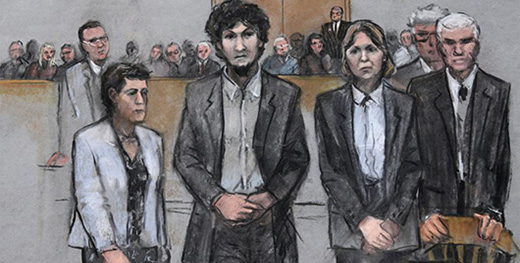
Rosario is 29 now. He was born in New York and brought up in Boston, where he was a menace. All last week, he wore a blue sweatshirt, black pants, black sneakers, leg irons and no hint of expression on a face unfamiliar with remorse as he listened to pretrial arguments of the prosecutor, James Larkin, and the objections of his own gifted appointed counsel, Roger Witkin, in the third-floor room where a panel of citizens will address the brutality of Orla Benson’s murder.
Rosario is a living advertisement for the flaws of a system where a single bureaucratic error can result in a monstrous evil being committed. In 1991, he was convicted of raping and beating a woman at the Forest Hills T station. He got 10 years but was out two years later.
Free on probation, he was arrested on April 24, 1994, for raping a 14-year-old runaway at knifepoint after she fled, naked, from his car. But the runaway kept right on running and would not testify, so Rosario went unconvicted.
He was indicted for unarmed robbery in Cambridge, but somehow never had his probation revoked. Then on July 31, 1995, seven weeks before Orla Benson died, Rosario was grabbed for the rape of a 15-year-old special needs student in Brighton. She had been working for Rosario, who had, quite amazingly, been hired by the city’s Parks and Recreation Department to boss teenagers retained for a summer of cleaning playgrounds.
“He told her unless she had sex with him, she wouldn’t get paid,” a lawyer familiar with the case of the special needs student said, adding that Rosario took her to his apartment on Glenville Avenue in Allston “and told her: No sex, no check. But, because she was retarded, he beat it.”
“He never should have been out,” Tom O’Leary said. “The system took a hit for him being on the payroll. Probation took a hit, too. But Orla took the biggest hit of all.”
Thursday, Rosario had an opportunity for minimal decency when he accepted, then reneged, on an agreement that had him pleading guilty to first-degree murder. But lunch with jailhouse lawyers, along with success in beating the system and making a sad joke of probation, caused him to change his mind.
So Tom Benson and his family will be forced to endure a trial where his daughter will die again; a trial where judge and jury will surely see in the testimony offered that this world needs people like Orla Benson as much as it needs a sunrise, because her biographer remains on the case, insistent on delivering his message.
“I know her,” said Sergeant Thomas O’Leary. “She was a wonderful girl.”