Put on a glove, watch a game, and the years fall away, time stands still, and the joy of baseball reminds you again of life’s eternal sweetness.
It could be in a bottom bureau drawer beneath some old tee shirts, sweat pants that no longer fit or laundered dress shirts purchased during the first Reagan administration and not worn since the second Clinton tenure. It might be on a closet shelf or perhaps in the attic, wrapped tightly in thick twine. Or maybe—if you’re an optimist, someone who never checks the date of birth on your driver’s license or are simply a bit delusional—it’s in the trunk of your car, ready to be used at the simplest provocation: a sunny day, a field, a driveway, a back-yard, really doesn’t matter.
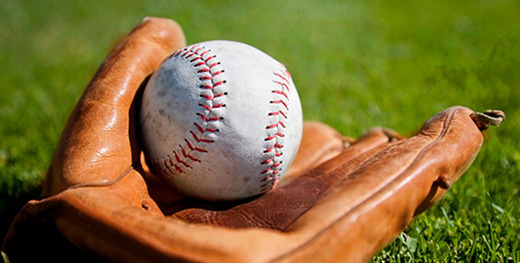
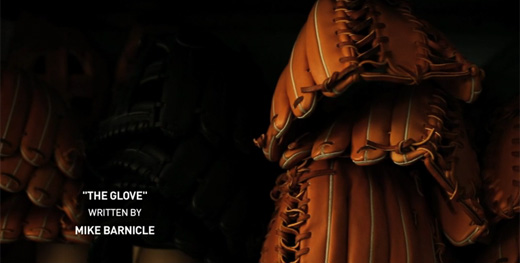
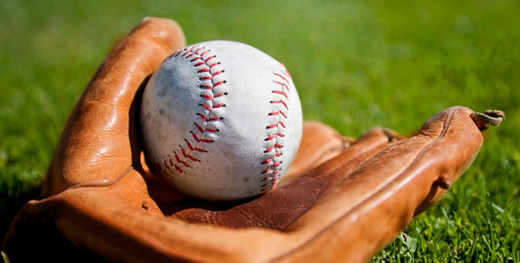
It’s your glove, your baseball glove. It’s got a soul, a memory all its own, and a future that never fades because it has never let go of the grasp the past has on you and so many others.
It might be a hand-me-down relic, a Spalding fielder’s glove with the name “George Kell,” faded but still semi-recognizable, stitched on its pocket, the leather darkened by 60 years of use. Maybe it’s a catcher’s mitt from 1962, a MacGregor Yogi Berra or Del Crandall model. Or a Wilson outfielder’s glove from the ’70s just like the one worn by Fred Lynn or the great Clemente before he died. Might even be your latest purchase, a Rawlings RGG1200, nice, soft leather, nearly broken in, less than a year old, bought because you never know when someone might want to play catch.
The glove is like checking a calendar. It comes out of the drawer, the attic, the trunk of your car with the first tease of spring. Comes out and stays out with the arrival of baseball and Opening Day.
Go ahead. Put it on your hand. Wear it. Punch the pocket. Flip a ball in the air. Catch it. Shut your eyes and watch the years roll off like shingles from a roof battered by the winds of winter’s last assault. Wait a minute and the glove, your glove, will unwind the decades between a moment when your waist was smaller than your sleeve length and life’s small ambushes had not yet altered your game plan.
That’s one of the great gifts of this, the greatest of all games, baseball: it allows you, still, to lose yourself in a dream, to feel and remember a season of life when summer never seemed to die and the assault of cynicism hadn’t begun to batter optimism.
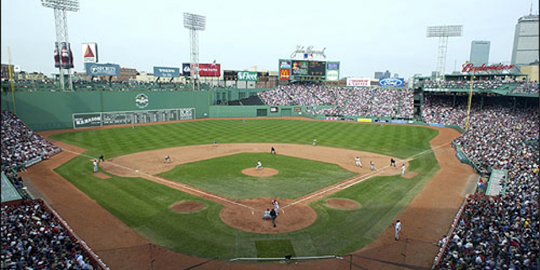
It is back for real this week, baseball. Returned to ball yards and constituencies as different as Los Angeles and Pittsburgh, as similar as Boston and St. Louis, as historic as Chicago and New York.
Baseball is a game that shouts “Slow Down” to America. Stop tweeting, texting, blogging, watching cable news, and obsessing about polls, lost planes, and focus driven politicians.
Baseball is a game that shouts to America: ‘Slow down!’
Baseball is a movable conversation across nine innings. It is eye contact with the person seated next to you in a park where the pitcher is separated from the batter by 60 feet, six inches or in a family room where a 60 inch TV screen hangs on the wall.
Almost everyone grows out of all the other games played earlier in life—basketball, football, hockey, soccer—the years and the calories taking their inevitable toll. So you sit and watch games involving athletes who are nearly seven-feet tall or who weigh 250-350 pounds and run “the 40” in fewer than five seconds.
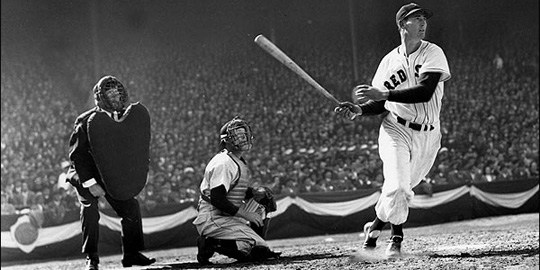
But nobody really grows out of baseball. Go ahead. Do it. Put the glove on your hand. Flip the ball in the air and it’s 1958 and Teddy Ballgame is in the batter’s box, or it’s 1967 and ‘Yaz’ is dragging the Red Sox across September into the impossible dream of a world series. Catch it and you can still hit and still run and still stand in the infield or outfield, hands on your knees, waiting for the pitcher to throw a heater, a slider, a curve. A sandlot, a playground, a high school field … You own them all for that one moment.
And when you open your eyes, sitting there in Section 16 or your living room, the players look kind of like you, don’t they?
They’re not wearing pads or helmets. Sure they’re quick and obviously athletically gifted beyond description or even comprehension. But these guys, these ballplayers, they’re about your size, aren’t they? When you were younger? When you played? When you put your glove down on the kitchen counter a half hour ago in order to make a turkey sandwich for yourself? Yeah … they are you, kind of, sort of, once upon a time.
Baseball is the perfect antidote to one of the particular cultural poisons of the age: That we—nearly everyone—are so busy, so time crunched, so stressed, so worn out by the demands and disappointments of life, of the economy, of family issues that there is not a second to spare in the course of a day. We have cell phones, text messaging and email to minimize human contact, apps to deliver dinner, do a kid’s school assignments, grocery shop, get a movie, a song, a book, a car, anything at all. And we’re stressed? Please!
Listen to the voice of baseball. Listen to Vin Scully. Listen to the game itself. It is telling you to chill, relax, reorder your priorities, winter is behind us, put the heavy coat in the closet, go outdoors, wear short sleeves, enjoy the sunshine, enjoy life.
Pay attention to this, the greatest game of all. It is your life played across nine innings. It comes with hits, runs and errors. It is played by people who are rather isolated on the field—the pitcher, the shortstop, the center fielder—and when they make a mistake, an error, it’s there for all to see. But they do what you must do every day: Get back in the batter’s box and keep on swinging.
Get your glove. Baseball is back.
https://www.thedailybeast.com/articles/2014/03/30/the-timeless-beauty-of-baseball.html