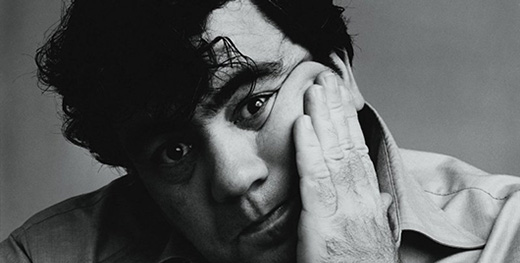
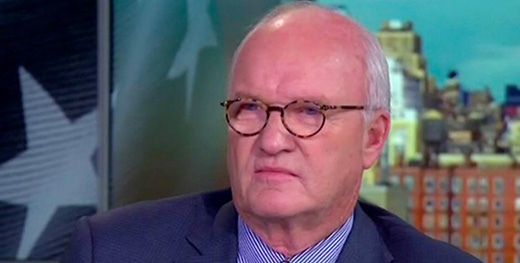
Mike Barnicle is an award-winning print and broadcast journalist, as well as a social and political commentator, who is a frequent contributor and occasional guest host on MSNBC's popular "Morning Joe" and "Hardball with Chris Matthews." Barnicle can also been seen regularly on NBC's "Today Show."
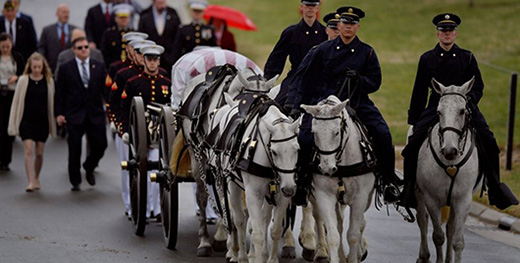
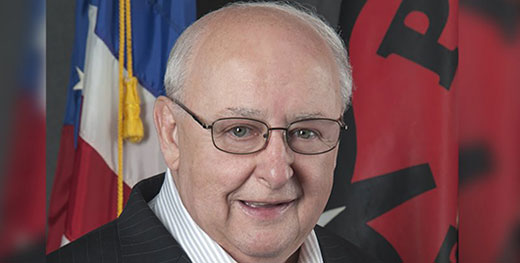
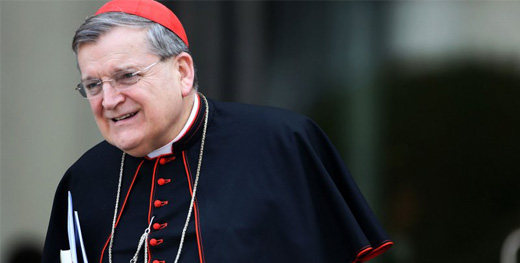
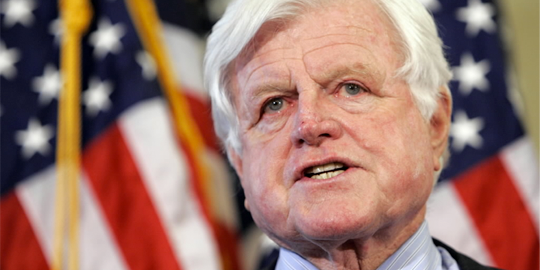
BOSTON — The Harvard community — and people the world over — is mourning the death of Reverend Peter Gomes, the man who ran the university’s Memorial Church for over forty years.
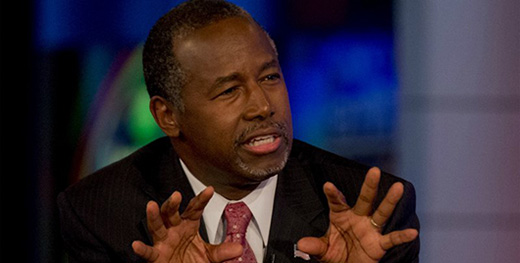
Gomes died Monday night because of complications from a stroke he had in December. He was 68.
The Reverend Peter Gomes died Monday at the age of 68, after a more-than 40-year ministry at Harvard University.
Gomes’ longtime friend, writer and columnist Mike Barnicle, met Gomes because the two would regularly spend early mornings at the same restaurant. “He was an education to sit with, next to, to listen to, a sheer education. Not just in terms of his moral values but his view on the world,” Barnicle told WGBH’s Emily Rooney on Tuesday.
A black, openly gay minister, Gomes was a decided rarity. He came out about his sexuality in 1991.
He was also politically conservative for most of his career, although he changed his political affiliation to Democrat to vote for Gov. Deval Patrick in 2006.
Barnicle said Gomes learned from his own experience being different, and set out to help others with theirs.
“He was was an expert at honing in on the demonization of people,” Barnicle said. “He could see people and institutions being demonized well before it would become apparent tthat they were being demonized.”
That, Barnicle said, gave Gomes a sense of fairness that underguarded his political and religious beliefs.
“It’s not fair to go after people because of who they are, or because of their sexual orientation, or because of their color, or because of their income, or because of their zip code. That’s who he was, he was an expert in what’s fair,” Barnicle said.
Gomes was known for his soaring, intricate speaking style. “I like playing with words and structure,” he said once, “Marching up to an idea, saluting, backing off, making a feint and then turning around.”
“His sermons were actually high theater in my mind,” Barnicle remembered.
Gomes did not leave behind a memoir; He said he’d start work on it when he retired, at 70. It’s a shame, Barnicle said. “We need more of him than just a memoir, we need people like him every day.”
Gomes reflected on his life’s work — and his death — on Charlie Rose’s talk show in 2007.
I even have the tombstone the verse on my stone is to be from 2 Timothy. “Study to show thyself approved unto God a workman who needeth not to be ashamed, rightly dividing the word of truth.” That’s what I try to do, that’s what I want people to thnk of me after I’m gone. When I was young, we all had to memorize vast quantities of scripture and I remember that passage from Timothy I thought, ‘Hey that’s not a bad life’s work.’ And in a way I’ve tried to live into it. So my epitaph is not going to be new to me, it’s the path I have followed in my ministry and my life.
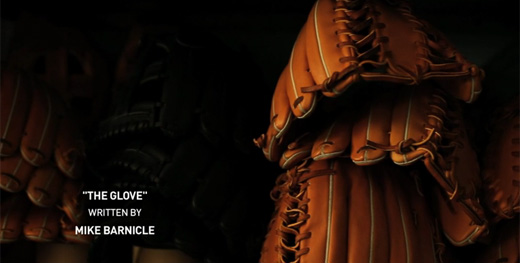
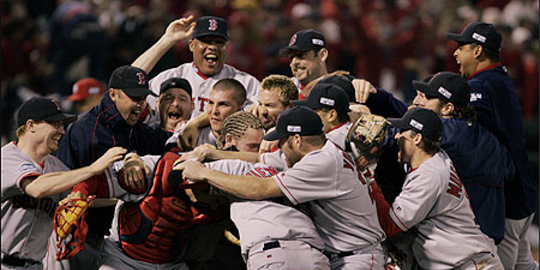
Mike Barnicle talks about the baseball gloves he’s had since 1954. “The Tenth Inning,” is a two-part, four-hour documentary film directed by Ken Burns and Lynn Novick that premieres this week, September 28 & 29th at 8pm ET on PBS. A new chapter in Burns’s landmark 1994 series, “Baseball,” “The Tenth Inning” tells the tumultuous story of the national pastime from the 1990s to the present day.
Mark Feeney from the Boston Globe says, “Mike Barnicle, who toiled for many years at this newspaper, serves as representative of Red Sox Nation. One of his great strengths on both page and screen has always been what a potent and vivid presence he has.”
Mike Barnicle talks about the Red Sox loss of 2003 to the Yankees and how it impacted his son, Tim. “The Tenth Inning,” is a two-part, four-hour documentary film directed by Ken Burns and Lynn Novick that premieres this week, September 28 & 29th at 8pm ET on PBS. A new chapter in Burns’s landmark 1994 series, “Baseball,” “The Tenth Inning” tells the tumultuous story of the national pastime from the 1990s to the present day.
David Barron of the Houston Chronicle calls Barnicle’s contribution to the film “perhaps the most valuable addition… (Barnicle) provokes simultaneous laughter and tears on the burden of passing his love of the Red Sox to a second generation….”
“The tale of the Sox bookend years of failure and triumph are given a personal connective thread by former Globe columnist Mike Barnicle, who frames the story through the eyes of his children and his late mother, who, Barnicle recalls, used to sit on a porch in Fitchburg, Mass., her nylons rolled down, listening to the Sox on the radio and keeping score on a sheet of paper.” — Gordon Edes for ESPN.com
Mike Barnicle: The Case For Ed Rendell as Chiefof Staff
Here he was early the other morning in Washington, Ed Rendell, the governor of Pennsylvania, 66 years old, in work-out clothes that made him look like he had stolen a tee-shirt and shorts from a locker at a homeless shelter. He wore a long-sleeved lime green Nike shirt, baggy shorts, a smile on his face and had a plastic take-out tray filled with pastries in his hands.
“Want one?” he asked. “The blueberry muffin looks good.”
He was there to participate in a televised walk-for-health organized by Mika Brezenski and MSNBC’s Morning Joe program. He was on the Mall, half way between the Washington Monument and Capitol Hill; the White House, a mile away, separated from Rendell by the distance between the different universe that has slowly but surely made Barack Obama’s many talents seem lost in a faculty lounge where tenure means nobody ever worries about a paycheck rather than on streets and suburbs where fear stalks the economic landscape causing parents to wonder and worry over prospects of a paycheck for them and a better life for their children down the line, beyond the horizon of November elections.
“What are you going to do next?” Rendell was asked.
“I’m not sure,” he replied.
He has a voice that resembles five miles of gravel road and a resume that has kept him in touch with the daily aggravations and achievements of a disappointed and angry public. He has been a District Attorney, mayor of Philadelphia and is now Pennsylvania’s term limited governor, about to hit the bricks when January arrives. He knows one thing for sure: There is no ideology in items like paving contracts and cops on the block. In those jobs, you either govern and get-it-done or you are gone.
Rendell has been out in the middle of the night at curbside homicides, slashed municipal and state budgets, balanced them too, cried with victims of violence, heard parochial complaints of state legislators, endorsed a losing candidate for president, dropped 40 pounds on a diet but never lost the ability to listen and count, to cut a deal and losses too.
“What about taking Rahm’s job?” he was asked. “That’ll never happen,” he said with a laugh.
It seems nearly certain now that Rahm Emanuel will soon leave as White House Chief of Staff to chase a dream he’s lived with for a long time: Be the next Mayor of Chicago, his home town.
When – and if – that happens, a guy like Rendell would be a gift to a presidency that sometimes seems more intent on lecturing rather than leading. Life is not a seminar to politicians, like governors and mayors, who make multiple decisions daily that ripple through states and cities with immediate impact.
Afghanistan and Iraq are literally about life and death with only a noble few, the military and their families, serving and suffering. A health care bill’s benefits are off on the horizon. A reform of bank regulations has left an entire industry – the financial services industry – uncertain about what new rules will mean so loaning and hiring are both on hold.
Obama’s accomplishments sit in the land like a gift marked “Do Not Open Till 2013.” Too late and too undefined for a country burdened by a lack of confidence in the future and an unhealthy fear of a present where politics careens crazily like a pinball, rebounding between the unearned anger of the Tea Party and the often clueless behavior of Democrats more afraid of losing an election than winning the confidence of people by telling the truth of our history: Any country that has endured depression, world wars, the social and military scar of Vietnam, the cultural disgrace of segregation, the slow, painful loss of industry overseas and Jimmy Carter can certainly deal with carving a new trail in this, a new century.
America needs a pep talk. And Barack Obama needs someone around him who has an instinct for what it feels like when you fear a mail delivery that contains a tuition bill, a phone call from a collection agency, empty spaces in the company parking lot, testimony to lay-offs and a calendar on the wall where the next page turned might as well have a question mark rather than a month.
Ed Rendell won’t be moving into the West Wing when he leaves office. But someone like him, someone who understands that life is often uneven and unfair but that we are all residents of a land rooted in optimism would be a huge benefit for a presidency that seems to have forgotten the flag they planted in the fall of 2008, the one that read, “Follow Me.”
Scott Brown, wearing a dark suit, blue shirt and red stripe tie in the mild winter air, stood a few yards in front of a statue of Paul Revere and directly across the street from St. Stephen’s Church, where Rose Kennedy’s funeral Mass was celebrated in 1995, telling about 200 gleeful voters that they had a chance to rearrange a political universe. The crowd spilled across the sidewalk onto the narrow street that cuts through the heart of the city’s North End, the local cannoli capital, located in Ward 3 that Barack Obama carried 2 to 1 just 15 months ago.
” ‘Scuse me,” Joanne Prevost said to a man who had two “Scott Brown for Senate” signs tucked under his left arm. “Can I have one of those signs? I’ll put it in my window. My office is right there.”
She turned and pointed across the street to a storefront with the words ‘Anzalone Realty’ stenciled on window. “Everybody will see it.” (See the top 10 political defections.)